


Hey there! A few of you are new here so I wanted to say that I’m happy to welcome you all to this space. Thanks for subscribing and reading the Brief. (Let me know if there’s something we should dig into 👀.)
On to the important stuff.
It’s been a pretty, pretty, pretty big week for crypto and fintech. But more on the sort of quiet, regulatory side. It was a gears-in-motion, wheels-turning sort of week.
So much has happened that I thought it would be a good time to take a look at how we got here. How, all of a sudden, fintech and crypto companies seem to be gaining access to parts of the banking system once reserved for banks…
This week marked the end of the 90 days the Trump administration gave federal regulators to make life easier for fintech and crypto companies.
Did they? Let’s look at what else happened this week.
Monday: The Treasury Department proposed rules defining which companies need a license to issue stablecoins in the U.S.
Tuesday: The Securities and Exchange Commission proposed new exemptions that would let crypto issuers to raise up to $75 million from investors with audited financial statements and ongoing reports.
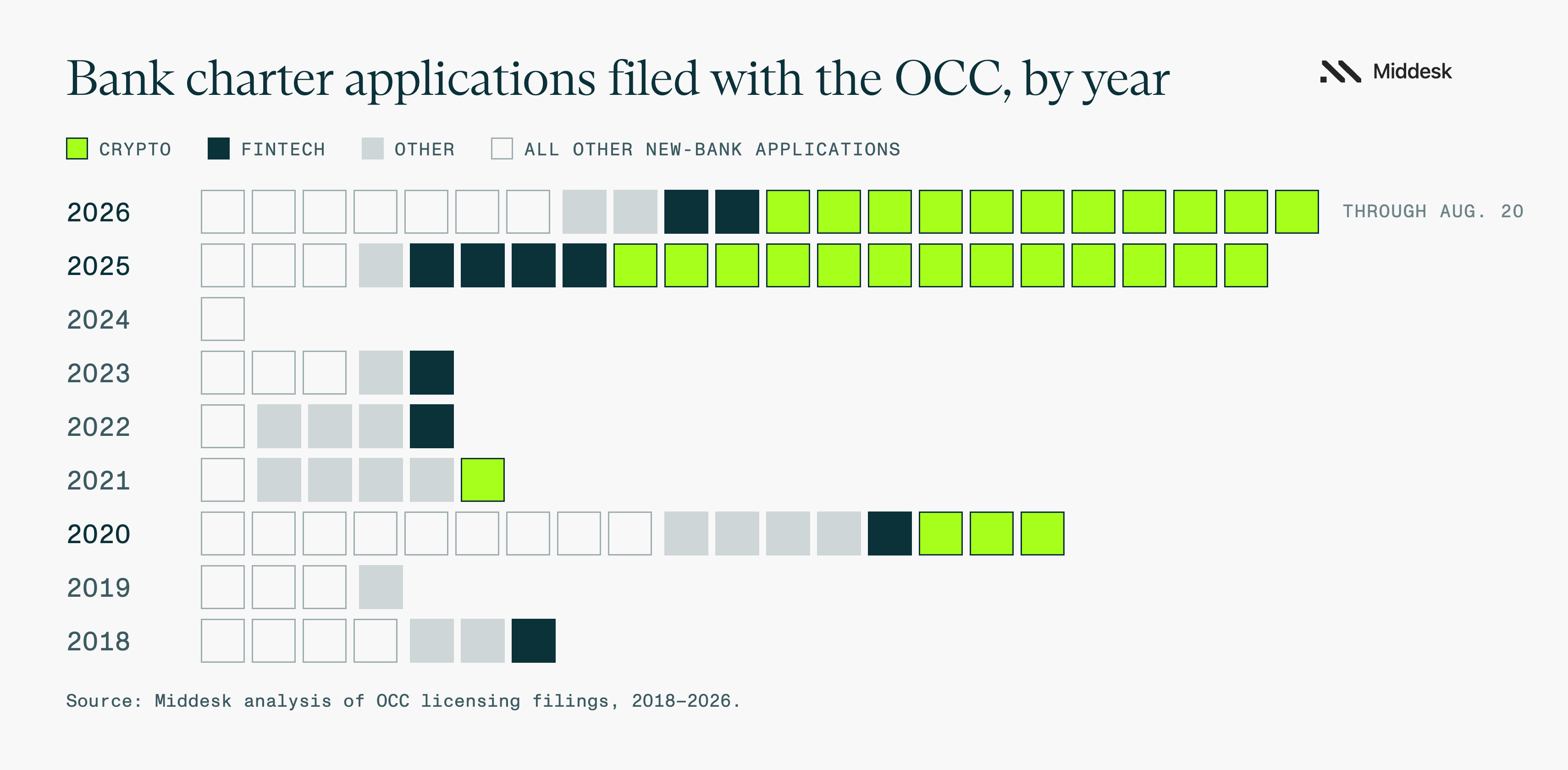
Wednesday: OCC Comptroller Jonathan V. Gould said 23 of the OCC’s 40 recent charter applications involve digital assets and promised a final GENIUS Act rule by November.
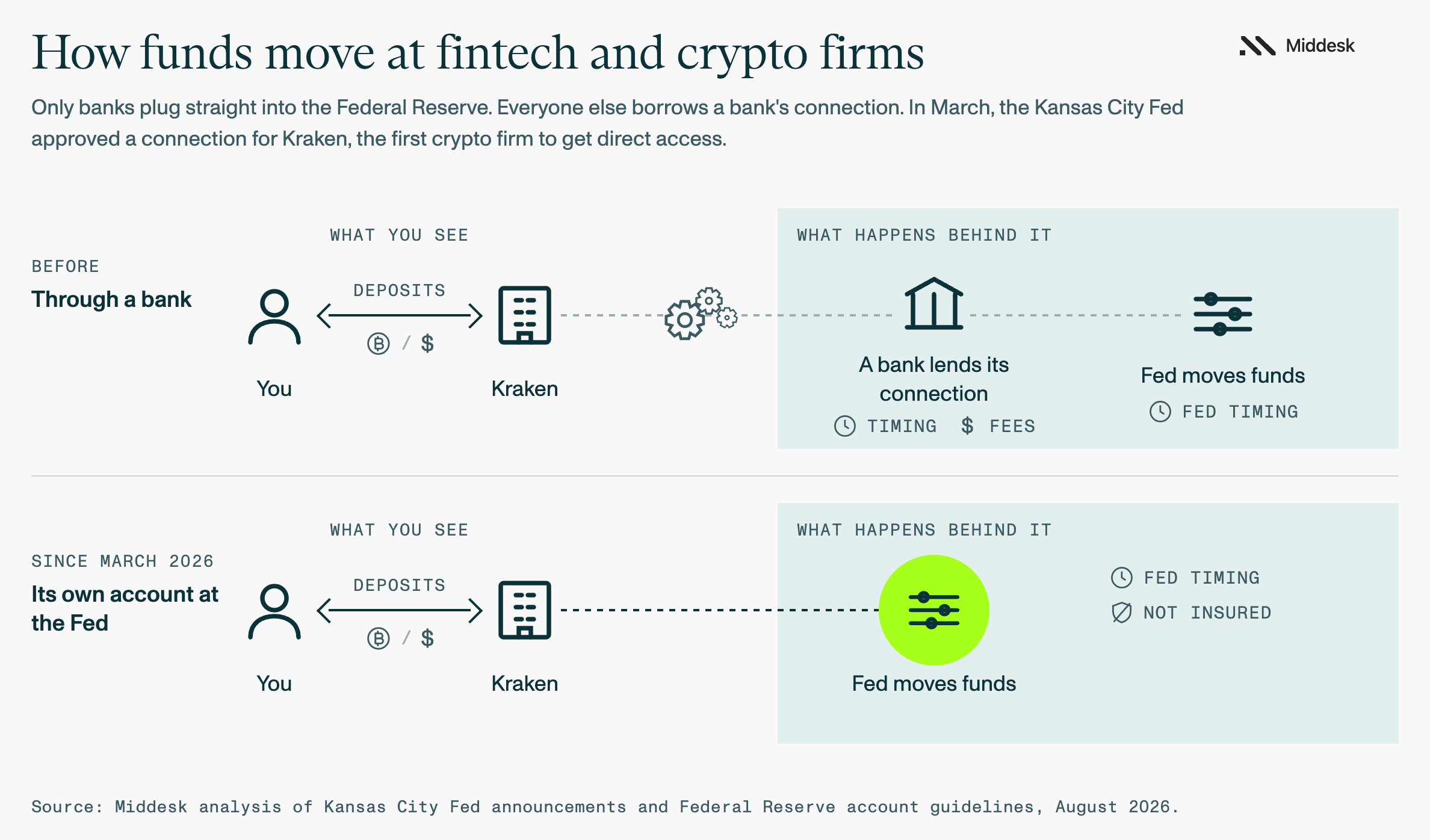
Fintech and crypto companies want independence from banks as gatekeepers. They currently route money through sponsor banks whose hours, pricing, and risk tolerance they don’t control. Some rules also change depending on the state. The new federal options promise one national rulebook and, for some firms, a way around banks as required middlemen.
Things are moving quickly, maybe even too quickly for some… at least for banks. Regulators now have three months to begin acting on their reviews. The Federal Reserve has another month to say whether fintech and crypto firms should get more direct access to the central bank’s payment system.
“Stablecoins’ path to regulation and integration is already under way,” said Blockchain Association chief executive Summer Mersinger, in a June Wall Street Journal letter to the editor under the headline “Stablecoins Aren’t Wildcat Notes.”
How the OCC opened national trust charters to crypto firms
The cascading moves trace back to last year’s GENIUS Act, the stablecoin law pushing crypto firms toward federal charters under a national framework. Since December, the Office of the Comptroller of the Currency has conditionally approved nine national trust charters for crypto companies, giving them a federal license to hold and manage assets without becoming banks.
The American Bankers Association questioned the move and called the shift an opening for “regulatory arbitrage.” The Bank Policy Institute had previously warned that applicants would get to run bank-like operations without the scrutiny that comes with deposit insurance or consolidated supervision.
In February, the OCC rewrote its own rule for what these trust charters are allowed to cover. The old wording limited them to “fiduciary activities,” or managing someone else’s money or assets on their behalf. The new wording allows non-fiduciary work connected to trust-company operations. The OCC said that was always true, just unclear before.
The Conference of State Bank Supervisors said the rule gave the OCC “unfettered discretion” to decide case by case what each trust bank can do. The Independent Community Bankers of America said that the OCC’s conditional approval of Coinbase’s application was a “grave mistake,” and argued that nonbanks were seeking the benefits of a federal bank charter without the regulations banks face.
Last month, stablecoin issuer Circle became the first of that group to win final approval on July 10. Circle CEO Jeremy Allaire said it was a “defining step in bringing blockchain technology and digital assets into the core of the U.S. financial system.”
Last week, the OCC gave preliminary conditional approval to a trust charter for World Liberty Trust Company, the crypto venture linked to the Trump family, to issue its USD1 stablecoin.
Payments fintechs want direct access
The Fed had been studying a stripped-down account for nonbank firms since October, when Fed Governor Christopher Waller floated the idea of a prototype to give basic Federal Reserve payment services to certain institutions. In March, the Kansas City Fed granted a limited-purpose account to crypto exchange Kraken, with an initial term of one year—the first such access to the Fed’s core payment system.
“We’re trying to learn,” said Fed vice chair Michelle Bowman.
In May, the Fed proposed a version of the pilot account as a standing option for other firms. It would have no interest, no overdrafts, no discount-window borrowing, no FedACH access, and overnight balances generally capped at $1 billion.
In response to the Fed’s proposal, the Financial Technology Association said that cutting out FedACH, the network used for direct deposits and transfers, “substantially limits the utility of the payment account.” Community banks warned that opening the space for non-traditional firms would divert deposits and payment activity away from community banks that support local economic development.
BPI, the ABA and Clearing House jointly asked the Fed to hold new entrants to the same anti-money-laundering standards as insured banks and to block any path from a payment account to a full master account.
Fed governor Michael Barr, the dissenting voice, said it lacked sufficiently specific and robust safeguards against money laundering by firms the Fed doesn’t supervise. The Fed says it wants to finalize the framework by the end of the year. Roughly twenty pending master-account applications are on hold until it does.
The opening still needs guardrails
None of this adds up to fintech and crypto firms simply becoming banks. It adds up to banking functions becoming available piece by piece: settlement without lending, custody without deposit-taking, issuance without insurance.
BPI floated suing the OCC over the charter approvals, arguing the agency is letting firms “avoid obtaining deposit insurance, consolidated supervision.” Better Markets said the FDIC’s proposed stablecoin rule would recklessly import crypto’s volatility into the federal deposit insurance safety net.”
Under the GENIUS act, crypto companies looking for approval have the requirement that every stablecoin be backed one-to-one by cash or short-term Treasurys.
The infrastructure for a parallel financial system is being built one approval at a time. Whether it comes with the same guardrails as the one it’s replacing is still unresolved.
“The statute applies the same regulatory logic to stablecoins that ensures that the banking sector is safe and reliable,” Blockchain Association chief executive Mersinger said in her June letter.