


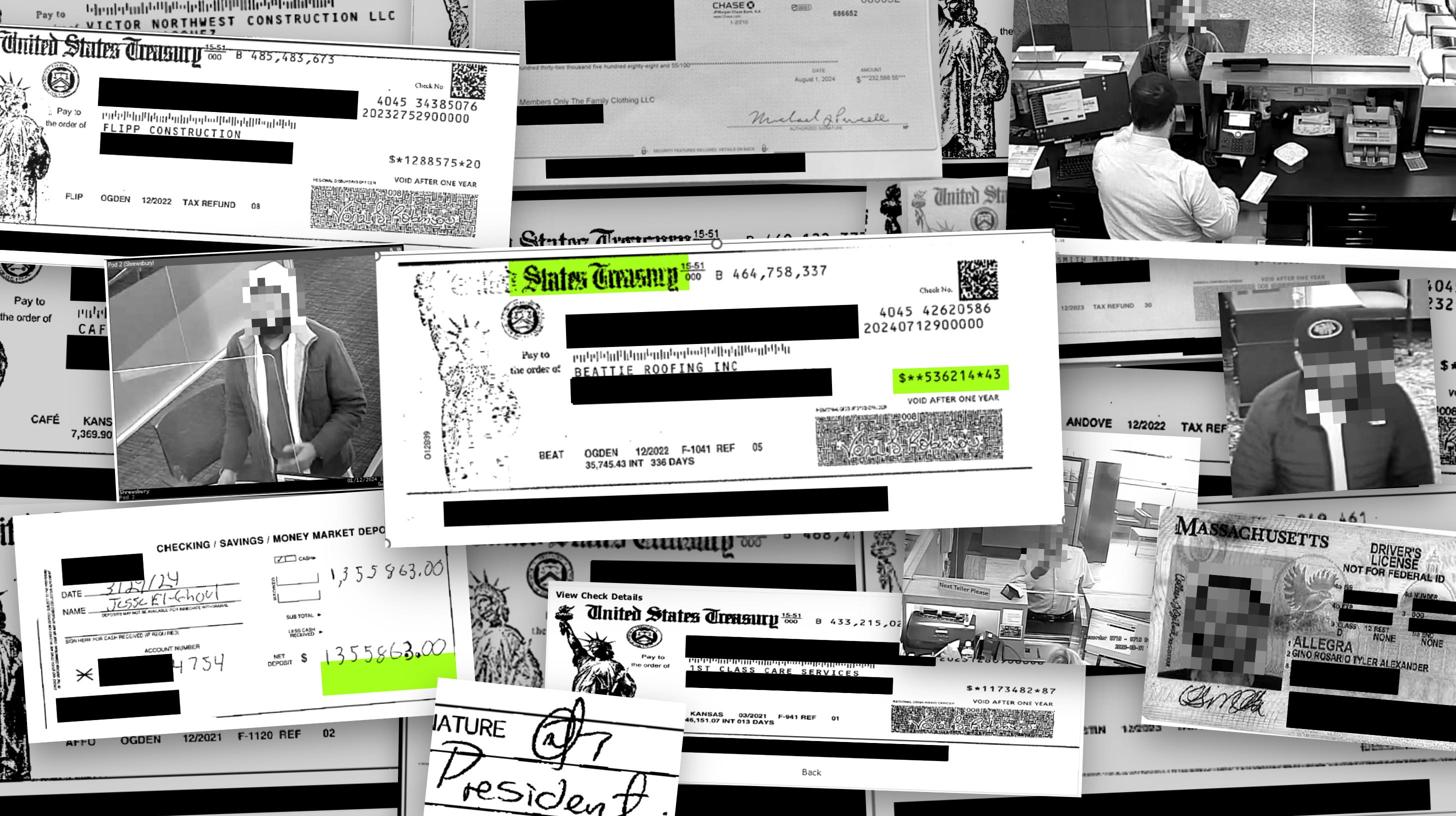
I recently started feeling like my news tracker kept feeding me a bunch of enforcement actions related to fraud rings stealing or selling Treasury checks all over the country.
Then, I saw that Kansas City Fed paper saying that some $15 trillion in payments between businesses happen via paper checks.
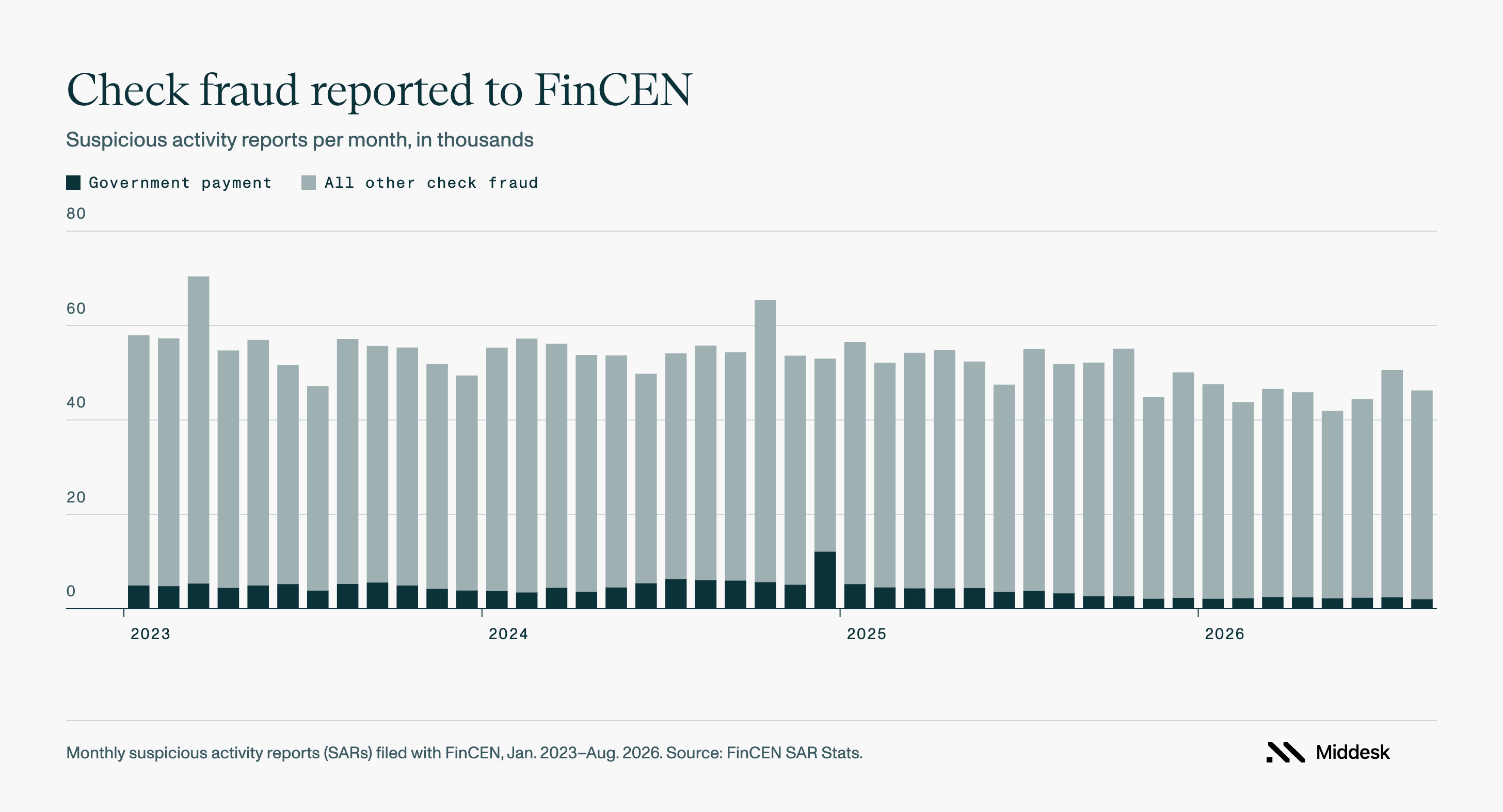
I thought that was a crazy number. It’s basically 2027—you’d think that wouldn’t be the case. The number of check fraud reports filed to FinCEN is trending down but it’s still pretty BIG.
So, I decided to take a look at one of the cases. But then, I couldn’t figure out how they stole the checks so I looked for that and found another case focused on just the stealing of the checks.
It’s been happening all over…
In 2023, a man named Nnamdi Opara filed paperwork with Massachusetts to incorporate a clone company called AFGO Mechanical Services, Inc. He made himself president, treasurer, secretary, director, and registered agent.
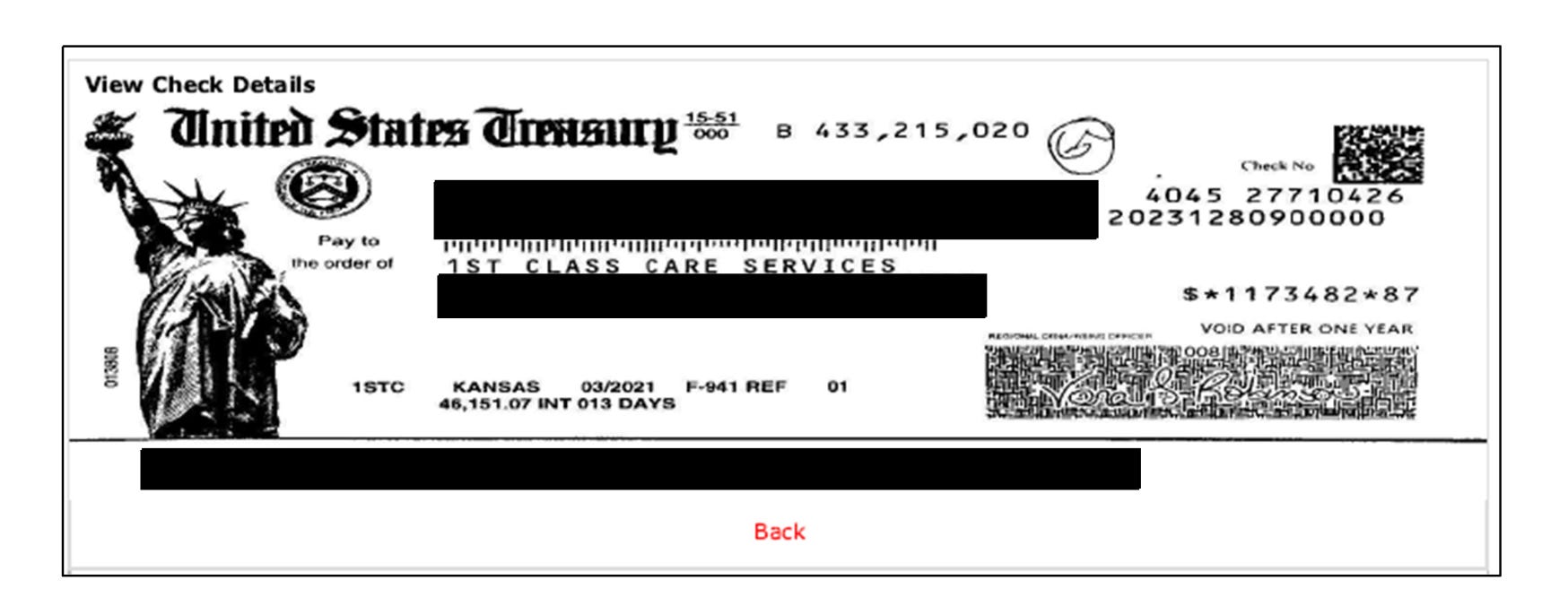
At the time, the real, decades-old, Queens-based AFGO Mechanical Services expected about $700,000 in Treasury tax credit checks but they never arrived.
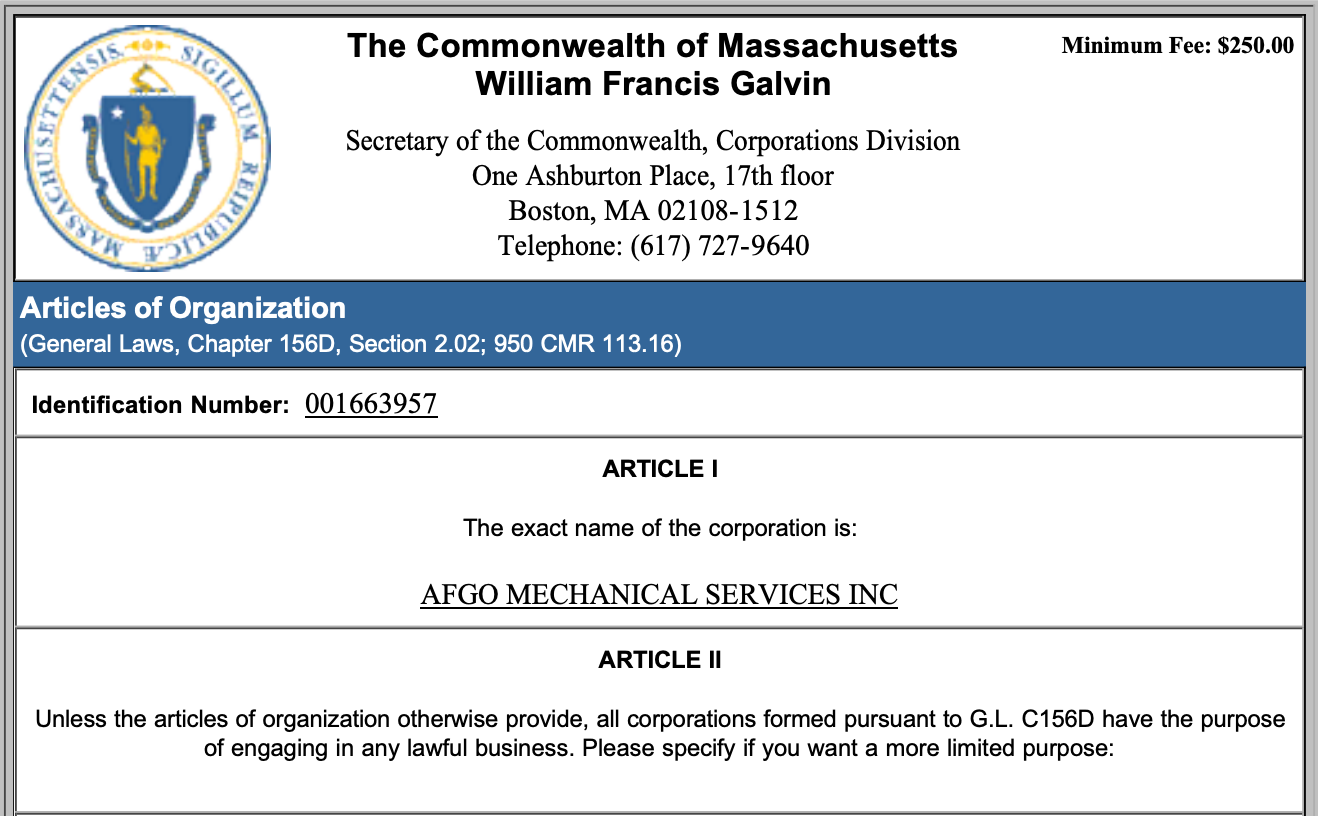
Opara took the checks to a bank and deposited them both into accounts opened under his clone, the Massachusetts-based AFGO.
The deposits were part of a $12.2 million stolen government check fraud ring that operated in the Boston area. Prosecutors said in a court hearing that the operation was led by a group that included, local rapper David “Doobie” Obeng and DJ Lindsley “DJ Goof” Georges.
Funny enough, Georges had been previously convicted of conspiring to launder money from checks taken from hacked bank accounts. In early 2024, Georges asked the judge in that case to end his probation early for good behavior. A day later, Georges texted Obeng a deposit slip for one of the stolen Treasury checks, $383,000.
How did they do this?
The syndicate registered businesses on state registries to open commercial accounts matching the names from the stolen check. In other cases, they washed the checks, which means the payee’s information or the amount on the check are removed and rewritten to reflect another payee’s identity and amount.
Enlisting others, Obeng and Georges laundered about $7 million through a web of shell companies that they registered. Some were new Massachusetts companies registered in recruits’ names and others were real businesses whose owners lent their bank accounts, such as a used-car dealer, a clothing company and a construction LLC.
State corporate filing offices serve as document repositories, confirming that forms are complete and filing fees are paid. They mostly check whether a name is already taken in their own state. The scheme works at the bank because the registration generates legitimate public documents that defeat standard customer due-diligence controls.
Here’s a timeline showing how Georges communicated with co-conspirator Amarpreet Singh and how they got flagged for suspicious activity at M&T Bank:
Then, they cleaned the profits. Prosecutors say another member of the group wired $310,300 to a Miami-area jeweler. Obeng then ordered Audemars Piguet watches, a Rolex, a diamond-encrusted Cuban chain and other jewelry to be shipped by FedEx.
The government filings singled out Shaunsayh Addo as a group member that helped launder the funds. In texts, Addo tells Obeng he moved about $425,000 out of an account, saying a rich contact of his is “gunna clean it up it’s all set 1000%.” Addo lends the money and he gets $25,000 in cash, then he requests advances of $384,000 between July 2024 and May 2026.
The checks, how did they get them?
Unclear for the Boston case.
But I can tell you how some other guys got a hold of the same kind of Treasury checks in Philadelphia.
This crew was stealing the checks from the return-to-sender pile in the U.S. Postal Service processing facility on Lindbergh Boulevard. A postal clerk started taking them and hiding them in his clothes and backpacks before leaving the facility… and it was all on tape.
The clerk sold the stolen envelopes to two other guys who operated an online wholesale market across Telegram channels, with names like The Franchise, SwipesLab, and StimLord. (You read that right: an online wholesale market for Treasury checks called StimLord.)
They posted photographs of stolen checks and sold them to buyers nationwide for roughly ten percent of face value. Before they were all arrested, they had been linked to stolen Treasury checks with an aggregate face value exceeding $121 million.
There is no evidence that the Boston crew bought the checks from the Philly guys but it’s how this thing works. There have been multiple busts of groups of people stealing checks in the mail and selling them on Telegram, including in Houston, Detroit and New York. (It was happening at JFK too!)
Four of the people charged in this Philly operation were sentenced on Monday to years in prison.
Paper checks
Last year, Treasury announced that most federal payments would move away from paper checks that September, citing fraud, theft and payment delays. The change had an effect with individual tax refunds but it is lagging with businesses. The agency reported this month that it paid almost $81 billion in business tax refunds by paper check in fiscal year 2026, more than double the $38 billion paid electronically.
The Federal Reserve Bank of Kansas City recently released a study showing that businesses continue to rely heavily on paper checks for business-to-business transactions despite the growth of electronic alternatives. It said that in 2024 some $15 trillion moved in between businesses.