



The SEC filed 348 enforcement actions in fiscal 2026, its lowest total in ten years. Yet it brought more civil cases in court than it did the year before.
In Europe, a court in Milan put digital bank Revolut’s Italian branch under oversight after prosecutors identified gaps in its money-laundering controls.
Also, did you read our piece on Nvidia and chip smuggling? We looked at trade data to check out what’s going on. Read it here. Part two is coming out soon.
Here’s what else is in the Rundown:
Goldman Sachs and Citigroup are among 21 financial institutions backing Project Faro, a stablecoin venture.
Wise disclosed a settlement with the Brussels prosecutor’s office resolving an inquiry into its European unit.
Federal health officials proposed tighter Medicare enrollment deadlines and mandatory fraud reporting for health and drug plans.
The Federal Trade Commission and seven state attorneys general expanded their lawsuit against telehealth provider Hims & Hers.
SEC files fewer standalone enforcement cases in fiscal year 2026
The SEC filed 348 actions in fiscal 2026, down from 456 the year before and 40% below fiscal 2024. Civil actions in court rose from 150 to 163. The biggest drop was in standalone cases brought through the SEC’s own administrative process: those fell from 153 to 72. Follow-on proceedings, which can bar or suspend someone based on an earlier conviction or order, fell from 69 to 47. Actions over delinquent filings fell from 84 to 66.
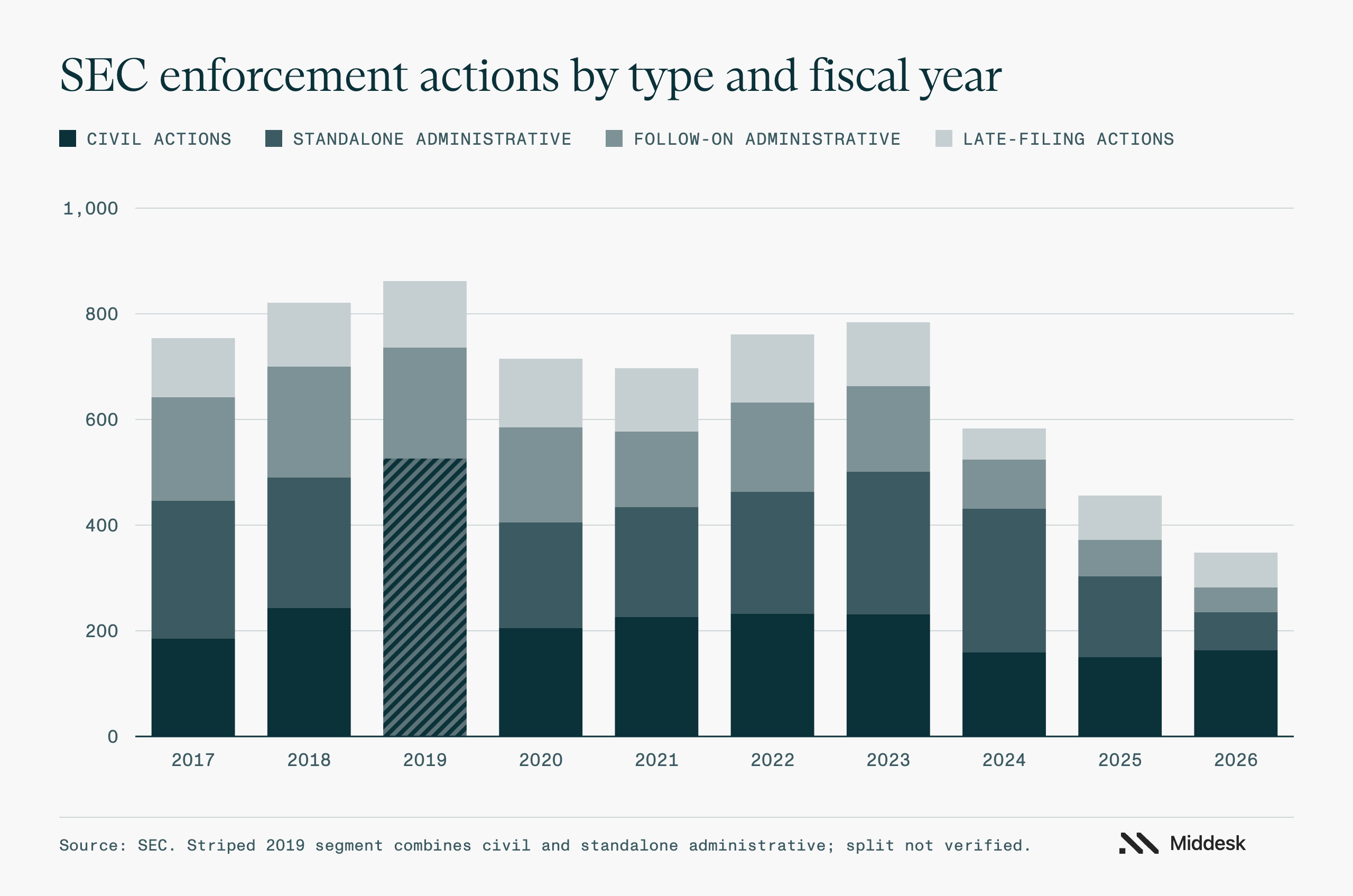
SEC enforcement director David Woodcock attributed part of the decline to the government shutdown and changes in staffing, priorities and where investigators were assigned. He said the agency is putting less weight on annual totals: a case count doesn’t show whether investigators stopped a fraud before more people lost money. Gerald Hodgkins, a former SEC enforcement official, found a sharp drop in broker-dealer cases. A report he co-authored said one possible contributor was the SEC’s shift away from cases against firms that failed to keep records of business messages sent outside approved channels.
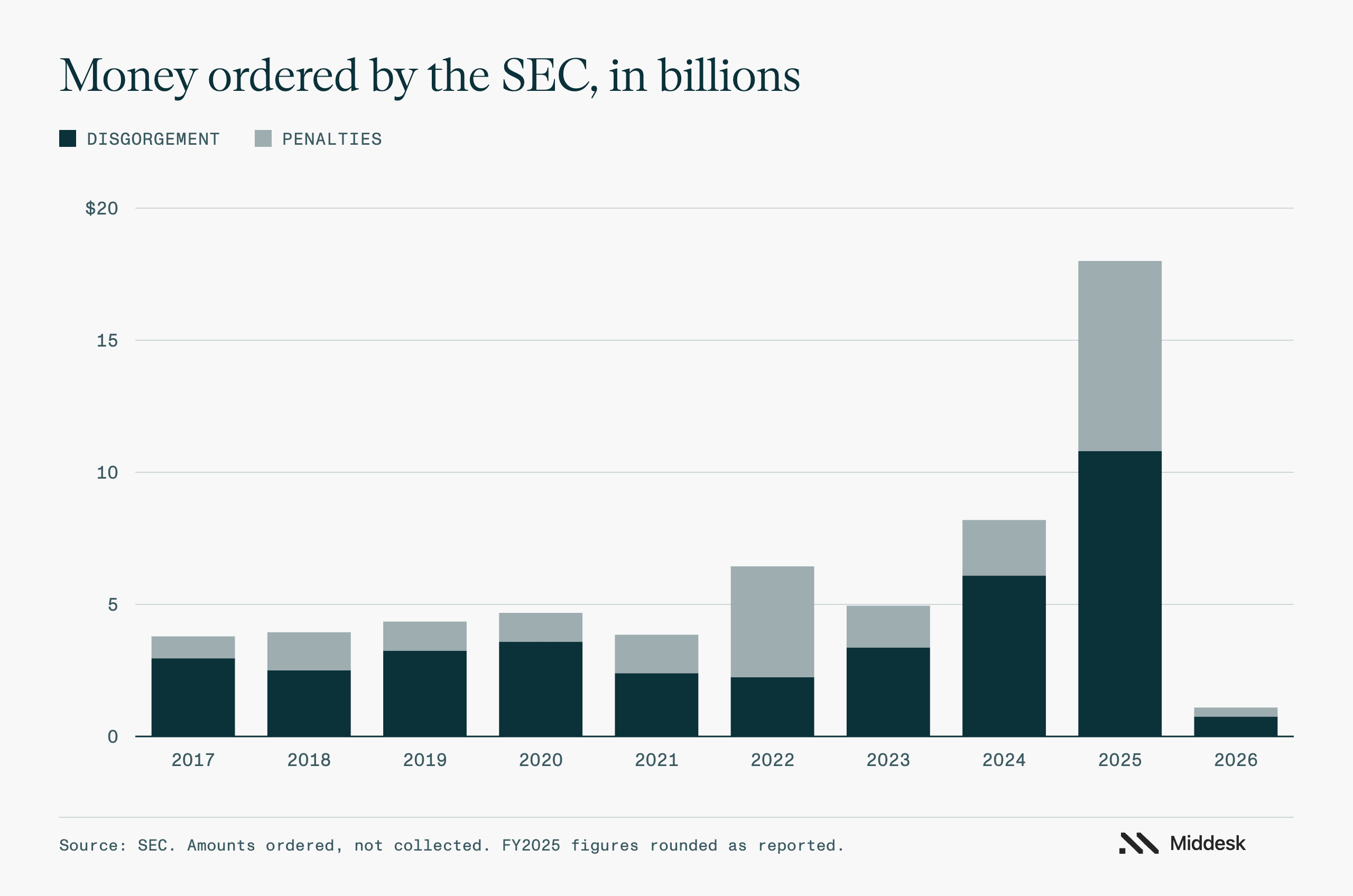
Sen. Elizabeth Warren, the top Democrat on the Senate Banking Committee, said Congress would scrutinize whether the SEC is doing enough to protect investors. The agency obtained about $1.1 billion in orders, down from $17.9 billion. A single case tied to the Stanford Ponzi scheme accounted for $14.9 billion of the prior year’s total, but WilmerHale lawyers noted that orders fell sharply even after accounting for that case and other adjustments. Meanwhile, the money the SEC actually returned to harmed investors rose from $262 million to $731 million. Those payments can come from older cases, so the increase doesn’t tell us whether the new enforcement priorities are working better.
FinCEN proposes changing how banks check who owns a business
Under the proposed rule, an Individual Taxpayer Identification Number, or ITIN, would no longer qualify as ID for a business’s owners. A non-U.S. owner could still use a Social Security number or an accepted alternative, such as a passport number and the country that issued it. The draft rule also says firms can ask about immigration status or permission to work in the U.S. when a risk or a regulator’s concern warrants it.
Firms would still check owners’ identities when a business opens its first account. Organizations could get the information from an outside source, but the person opening the first account would still have to certify it. Comments are due 60 days after the proposal appears in the Federal Register. FinCEN stopped requiring U.S. companies to report who owns them in 2025 and made that change permanent this summer. That means less ownership data in the federal register without changing what banks have to check: banks verify owners when a business opens an account. The reporting law also faced court challenges but the Supreme Court declined to hear two cases without ruling on the merits.
New Medicare fraud proposal targets provider enrollment
Under the proposal, providers and suppliers would have to report every change to their Medicare enrollment information within 30 days. Today, that deadline generally applies to major changes, such as a new owner or practice location. Other updates can take up to 90 days. The agency could also deny or revoke enrollment if it can’t verify an owner’s or manager’s identity, or if it finds that person poses an undue risk of fraud, waste or abuse. The proposal would also require Medicare Advantage and Part D plans to report suspected or substantiated fraud, waste and abuse, which the agency currently encourages but doesn’t require.
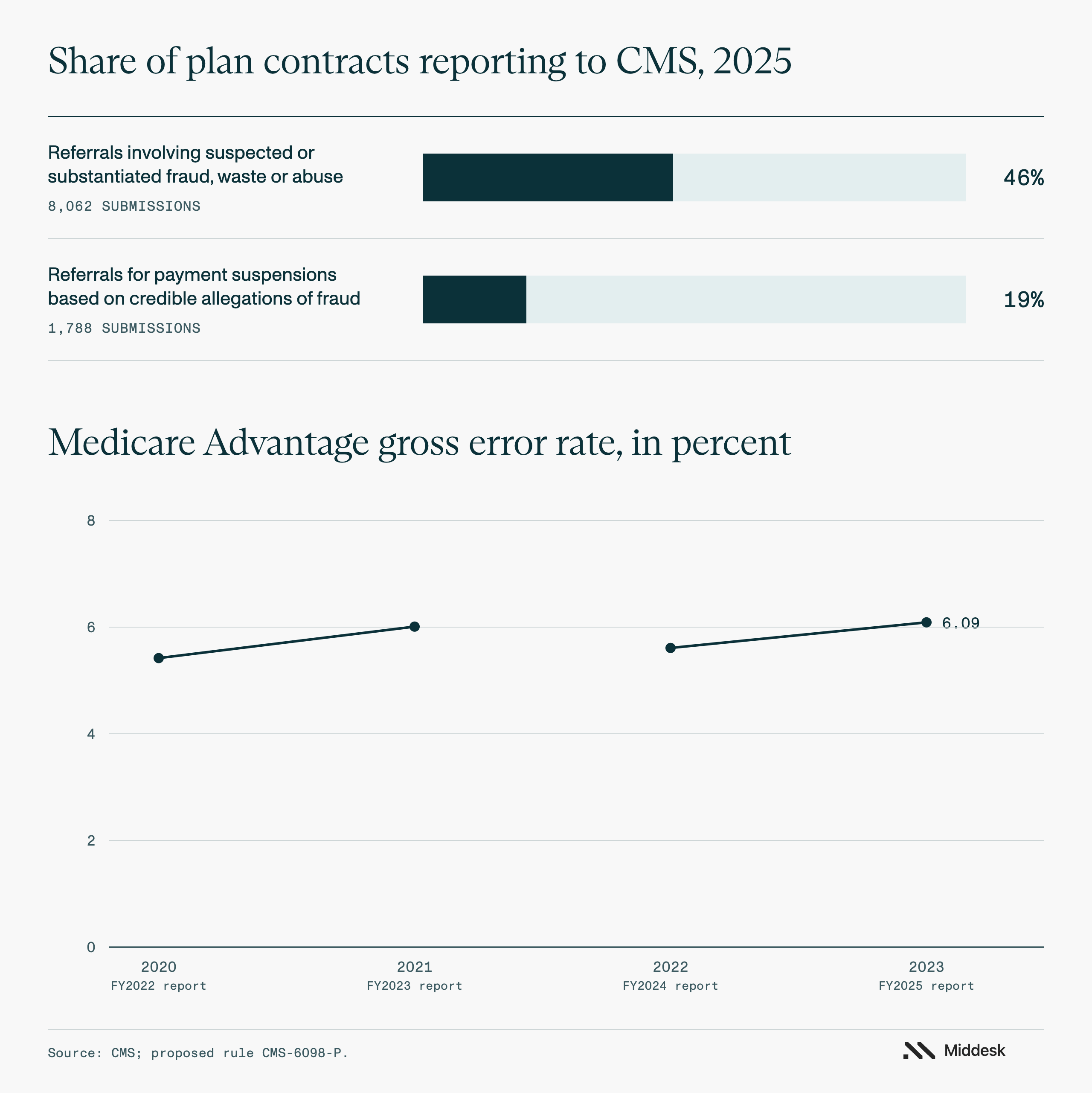
In 2018, the federal health department’s inspector general recommended that Medicare Advantage and Part D plans be required to report fraud and abuse to a central system. Reporting referrals was still voluntary in 2025, when only 46% of contracts reported any, according to CMS. In June, the Justice Department announced charges against 455 defendants in a nationwide health care fraud and opioid abuse crackdown involving more than $6.5 billion in allegedly false claims. One case involved an alleged $3.7 billion in claims for catheters and other medical equipment that prosecutors say was never delivered.
A court in Milan puts Revolut’s Italian branch under one year of oversight
Prosecutors said gaps in Revolut’s controls let people under investigation or convicted of serious crimes move, hide or divert €76.5 million. The investigation grew out of a tax fraud case and an inspection that found problems with customer checks and recordkeeping at a crypto business in the same group. Prosecutors said the gaps also let people move more than €4.6 million in assets already subject to court restrictions before investigators could spot the transfers. The administrators’ authority is limited to the parts of the business where investigators found problems.
Bank consortium commits $270M to Project Faro for institutional stablecoin
Goldman Sachs, Citigroup, Santander and Deutsche Bank are among the 21 institutions backing the venture. It plans to issue a dollar-backed stablecoin in the first half of 2027, then pursue a euro version. The group has not announced which blockchain it will use, who will hold its reserves or who will run the venture. The project began last year with ten banks exploring a reserve-backed digital dollar. The group now says it wants to use it for cross-border payments and to settle trades in digital assets.
Wise resolves Belgian anti-money laundering inquiry with Brussels prosecutor
Wise said in its half-year results that its Belgian subsidiary reached the agreement without admitting wrongdoing. On the earnings call, Wise’s finance chief said both sides agreed to keep the amount private and described it as immaterial to the company’s results. The same results show the scale of the payments business: customers moved $141 billion across borders in the first half of its fiscal year, up 24% from a year earlier.
FTC and seven states expand deceptive billing and health-privacy lawsuit against Hims & Hers
Arizona, Florida, Nebraska, Ohio and Wisconsin joined California and Utah in the case. The amended complaint alleges that the telehealth company promised confidentiality but shared sensitive health information with advertising platforms, including Meta and Snap, without informed consent. The complaint also alleges Hims & Hers enrolled consumers into recurring subscription charges before they completed consultations with licensed medical providers and created hurdles to canceling memberships. In its latest quarterly SEC filing, Hims & Hers recorded an estimated $60M litigation contingency accrual while denying the allegations and maintaining that its privacy and billing practices comply with applicable law.