


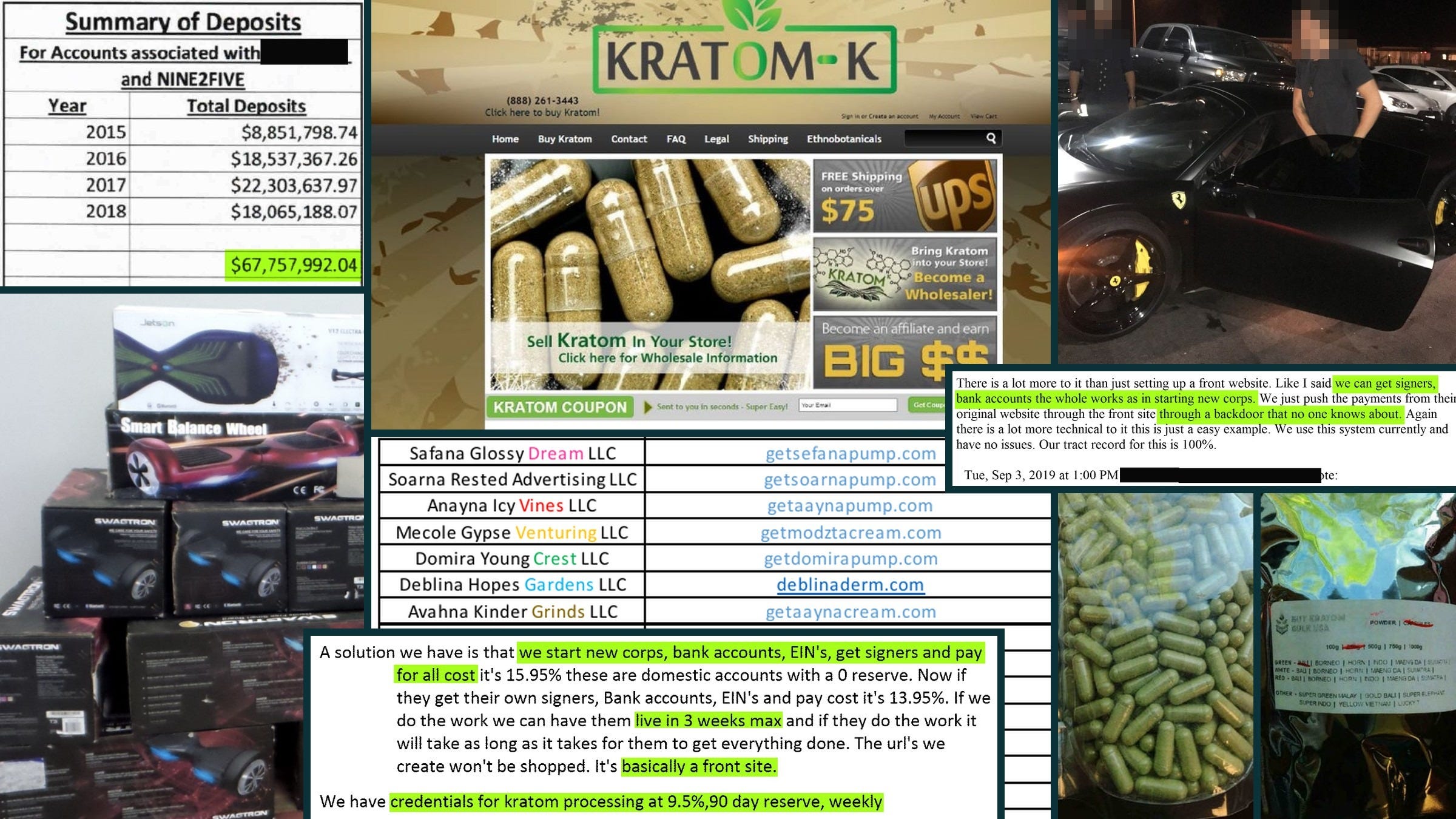
A couple of months ago, the Federal Trade Commission settled a $12 million dispute with payment processor Humboldt Merchant Services over how it let fraudulent merchants process payments despite years of red flags.
Turns out that case was connected to a wider federal dragnet involving bank fraud, money laundering, wellness scams, and a network of thousands of shell companies.
The most interesting part was running those names through Middesk: dozens of them remained active, and more than 100 were still attempting to open accounts across the financial system well after federal courts stepped in.
Here’s the whole story:
On paper, Diamani Urban Ventures LLC was an easy merchant to approve. The company was a small Maryland business that sold hoverboards and scooters, with a business checking account at Chase.
Behind the hoverboard storefront, Diamani was a front for selling kratom, a psychoactive plant that acts on the body’s opioid receptors and has been linked to overdoses.
Diamani was one of hundreds of shell companies created in a network built for transaction laundering, a scheme that enables high-risk and fraudulent sellers to run their sales through merchant accounts that banks wouldn’t otherwise approve.
In 2023, prosecutors said at the center of the scheme was CB Surety, a company that built a network of business fronts that pushed about $100 million in card payments through fraudulent merchant accounts used by drug sellers, online casinos and scammers.
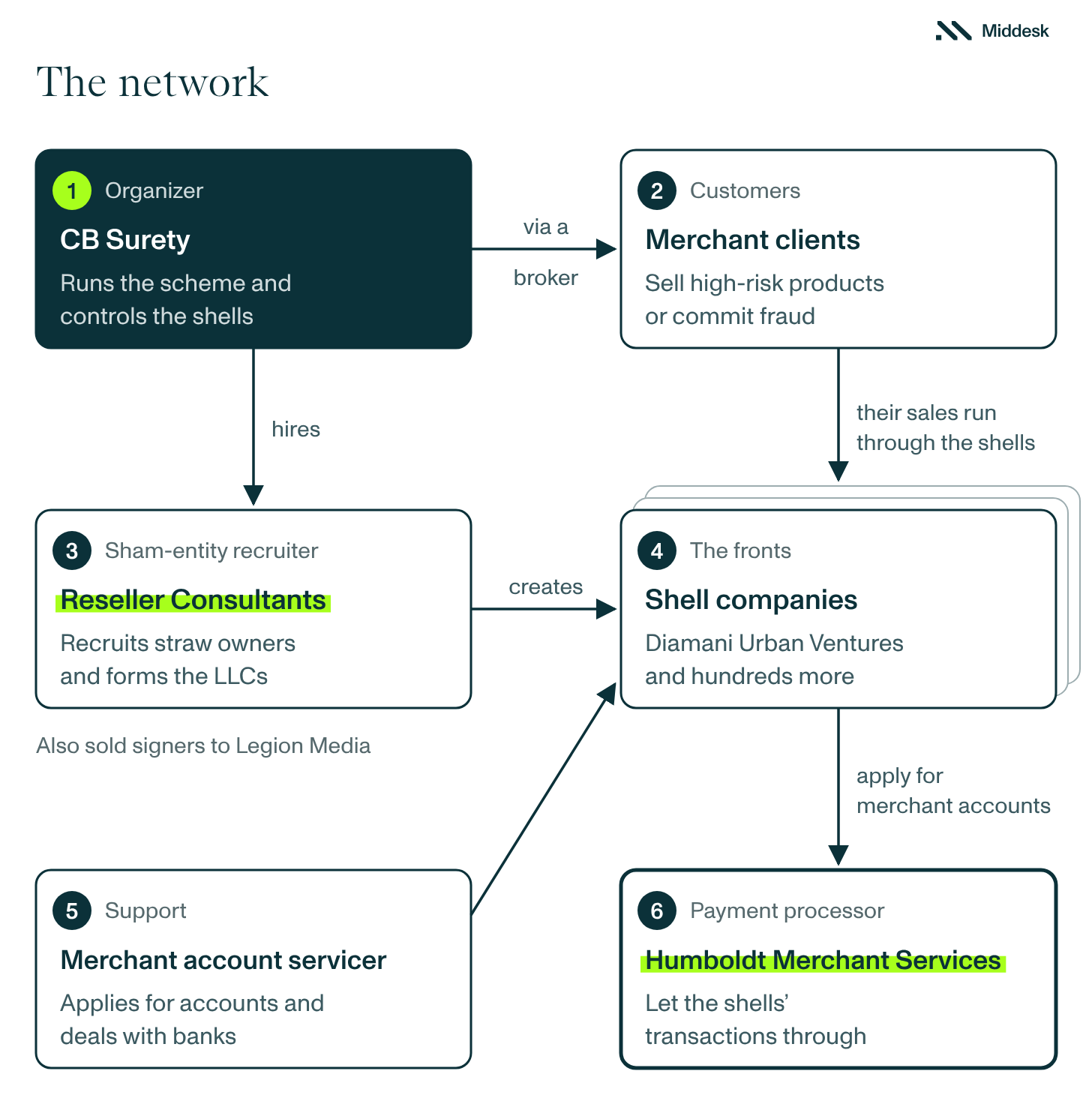
In September, the Federal Trade Commission sued payment processor Humboldt Merchant Services for opening more than 1,000 merchant accounts for these shells after ignoring repeated warnings from both its own risk managers and Mastercard.
Despite the charges and sentences brought against the players in the network, some parts of it remain active.
A Middesk analysis of some 5,000 companies listed in court filings found that more than 100 of them were likely applying for banking and payments accounts after the network was accused of bank fraud and a judge froze its assets in late 2023. The most recent attempts came in September, days after the FTC sued Humboldt.
The kratom operation
Diamani was a front for Carlsbad, Calif.-based Nine2Five, a company that had imported and sold kratom online for a decade when it was first indicted in early 2023. The company laundered its transactions through more than 25 business names and about 50 bank accounts. Its mail went to rented mailboxes, and it brought kratom into the country declared as fertilizer, green tea and seaweed.
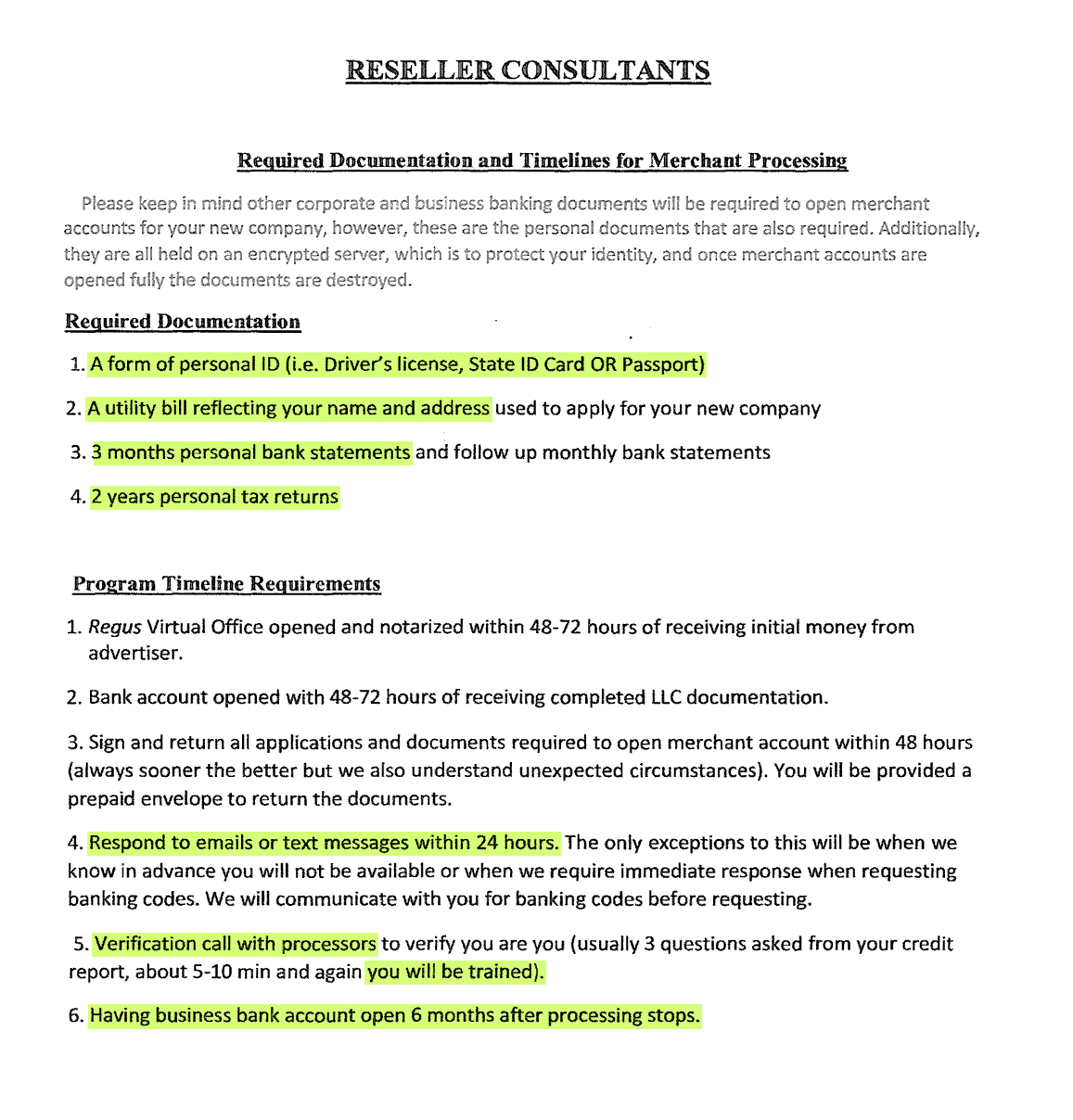
To run the operation, Nine2Five worked with CB Surety, which partnered with Reseller Consultants to find people who would put their names on shell companies like Diamani for a fee, or so-called straw owners. The straw recruiters offered $750 a month to anyone willing to lend a name. It asked for a driver’s license, a utility bill, three months of bank statements and two years of tax returns.
In an email, CB Surety’s director of operations described the company’s service: for a new client, he could “create a front company and URL and get MID’s,” or merchant accounts.
Prosecutors said Reseller Consultants formed two companies in each person’s name and the business names followed a formula: three seemingly unrelated words, the first starting with the same letter as the straw owner’s first name. That helped the network keep track of which companies belonged to which owner.
Companies like Diamani needed to look legitimate to get merchant accounts. Reseller Consultants directed the straw owner to rent a private mailbox to serve as its business address, open a bank account and sign contracts for warehouse fulfillment. Straw owners were coached for verification calls with processors and they were instructed to keep the business bank account open for six months after processing stopped.
“We just push the payments from their original website through the front site through a backdoor that no one knows about,” a CB Surety employee told a potential client.
Once a shell had a merchant account, CB Surety connected it to a real merchant’s website. A customer bought kratom, and the bank recorded a sale by a hoverboard store. On a single day, CB Surety’s system texted 38 kratom buyers that their purchase “will show as ***DIAMANI URBAN VE SILVER SPRING***.”
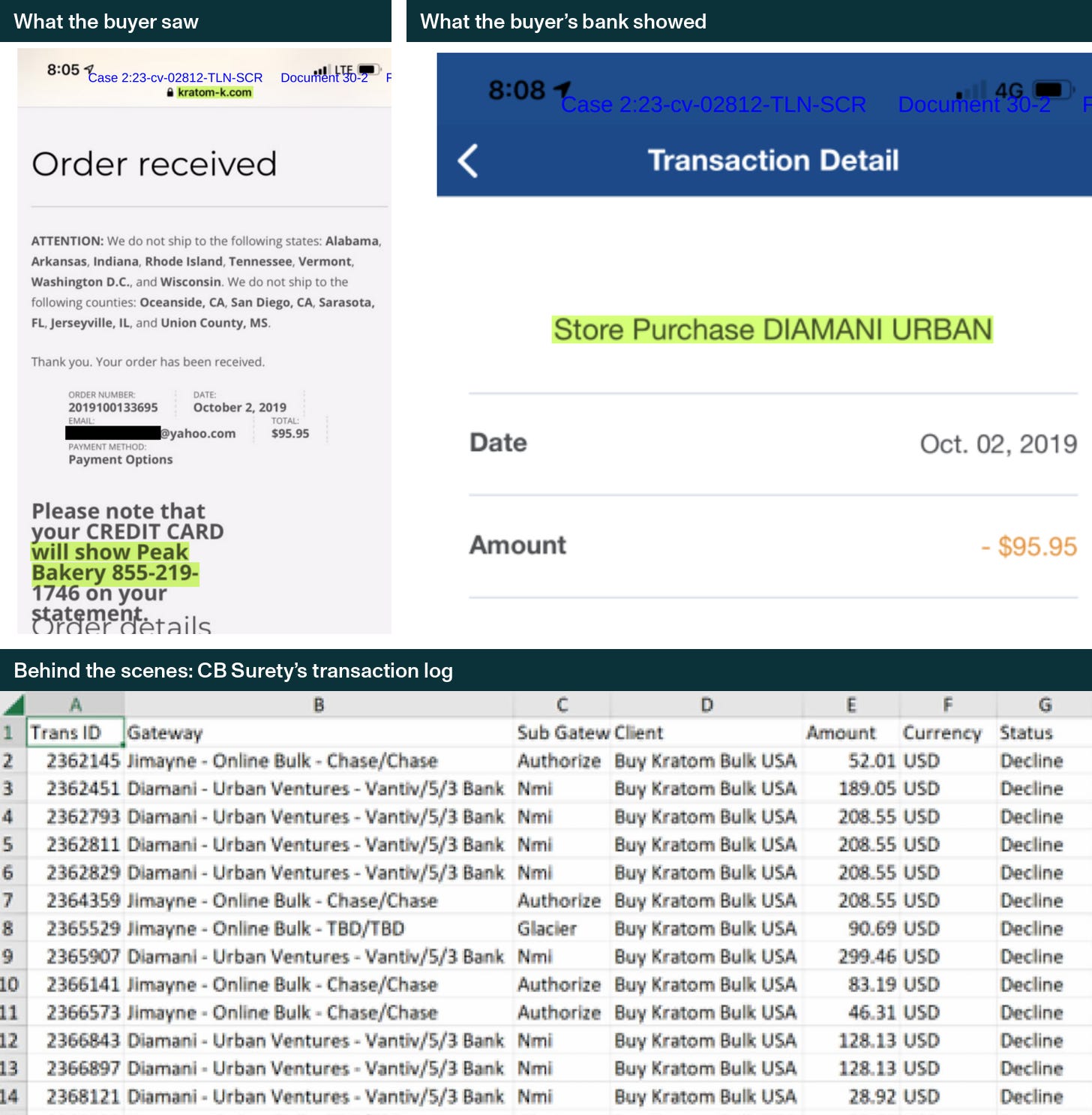
Spreading charges across accounts this way kept any single shell from drawing enough complaints to be flagged, a tactic known as load balancing. Mastercard calls charging the same card through several merchant accounts “card sharing.”
Hoverboard inventory
Most of the shell companies in the network reached the banks through middlemen, companies that sign up merchants and pass their applications along. In 2019, CB Surety asked one of these middlemen to take Diamani.
The middleperson said that the bank would want photos of inventory or a fulfillment agreement. Days later, CB Surety sent a file with two photos: hoverboards and handbags.
“Did you get a chance to review it and look at the inventory pictures? Was that enough to satisfy the bank you think,” the CB Surety director asked in a follow-up email.
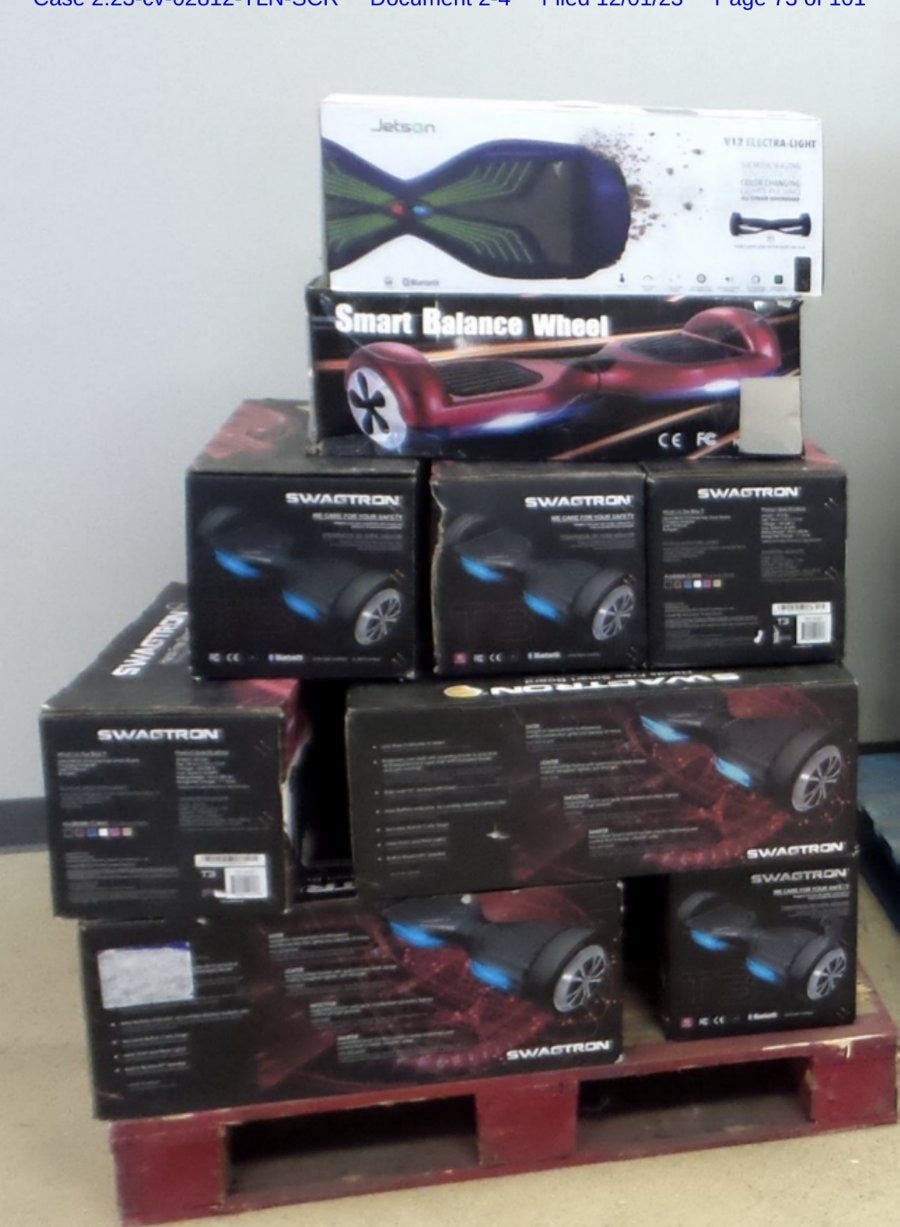
The photos weren’t Diamani’s. Every file name began with “Screen Shot,” and a federal postal inspector found two of them on other companies’ websites.
That October, a payment processor asked for a site survey, an in-person visit to confirm the business was real. When the broker passed along the request, CB’s director replied: “What does the site survey involve. This is a front site, so need to be cautious on this.”
The payment processor
Humboldt Merchant Services marketed itself as a payment processor for “high risk” merchants. The FTC said that Humboldt processed at least $139 million through accounts it gave to shells created by Reseller Consultants.
Humboldt labeled some of these accounts as “performance marketing” that mostly sold supplements and skin creams on “free” trials. Those businesses earned Humboldt margins above 15%, compared with 5% or less on its other accounts. By 2017 that side of the business made up about 80% of Humboldt’s profit.
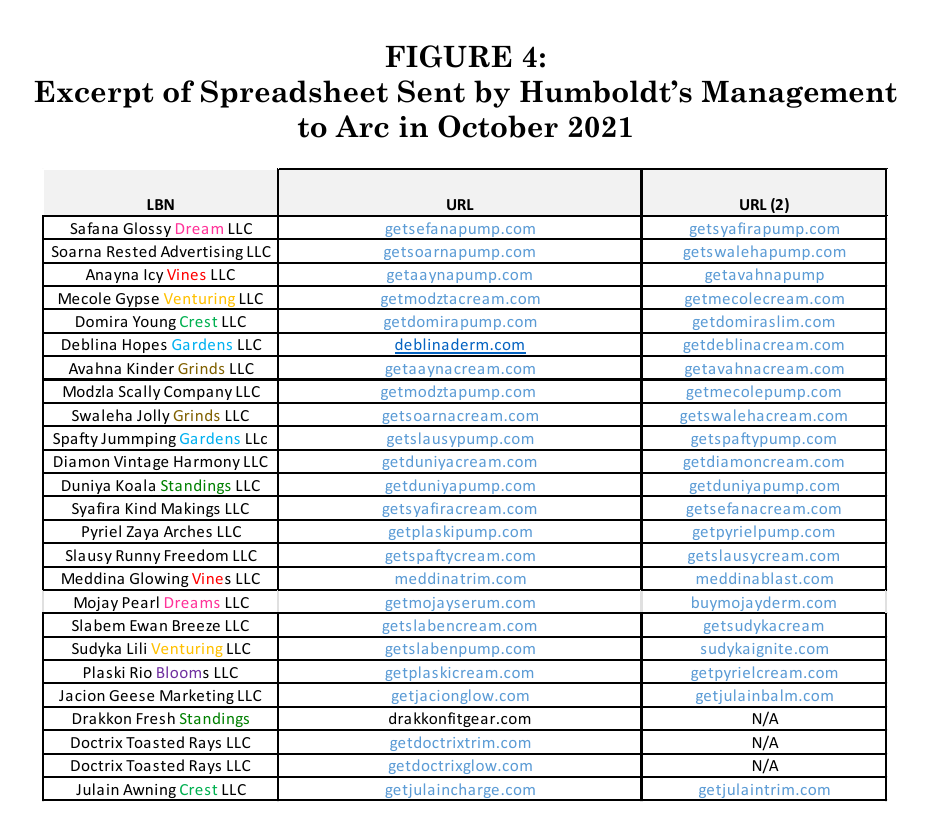
In 2019, a senior underwriter wrote that when staff called the listed owners, “they know nothing about their own business.” In 2021, Humboldt staff mapped a pattern and sent a sales agent a spreadsheet of look-alike shell companies, color-coded by the words their names kept repeating but executives said to ignore them.
Merchants’ sales were spread across multiple accounts to avoid getting enough chargebacks, or customer-disputed transactions, to be flagged by the card networks. Mastercard kept spotting instances of this load balancing at Humboldt and warned the processor of suspicious activity in its portfolio in 2017, 2018 and 2019.
Rather than close the accounts, Humboldt loosened its rules. It moved accounts to an affiliate’s bank code with a cleaner record, where 82% of charges were approved. The processor also raised its chargeback limit from 5% to 9% as long as each account stayed under the card networks’ monthly count, a rule the FTC says made it easier to spread sales across accounts and avoid detection.
Shell Game
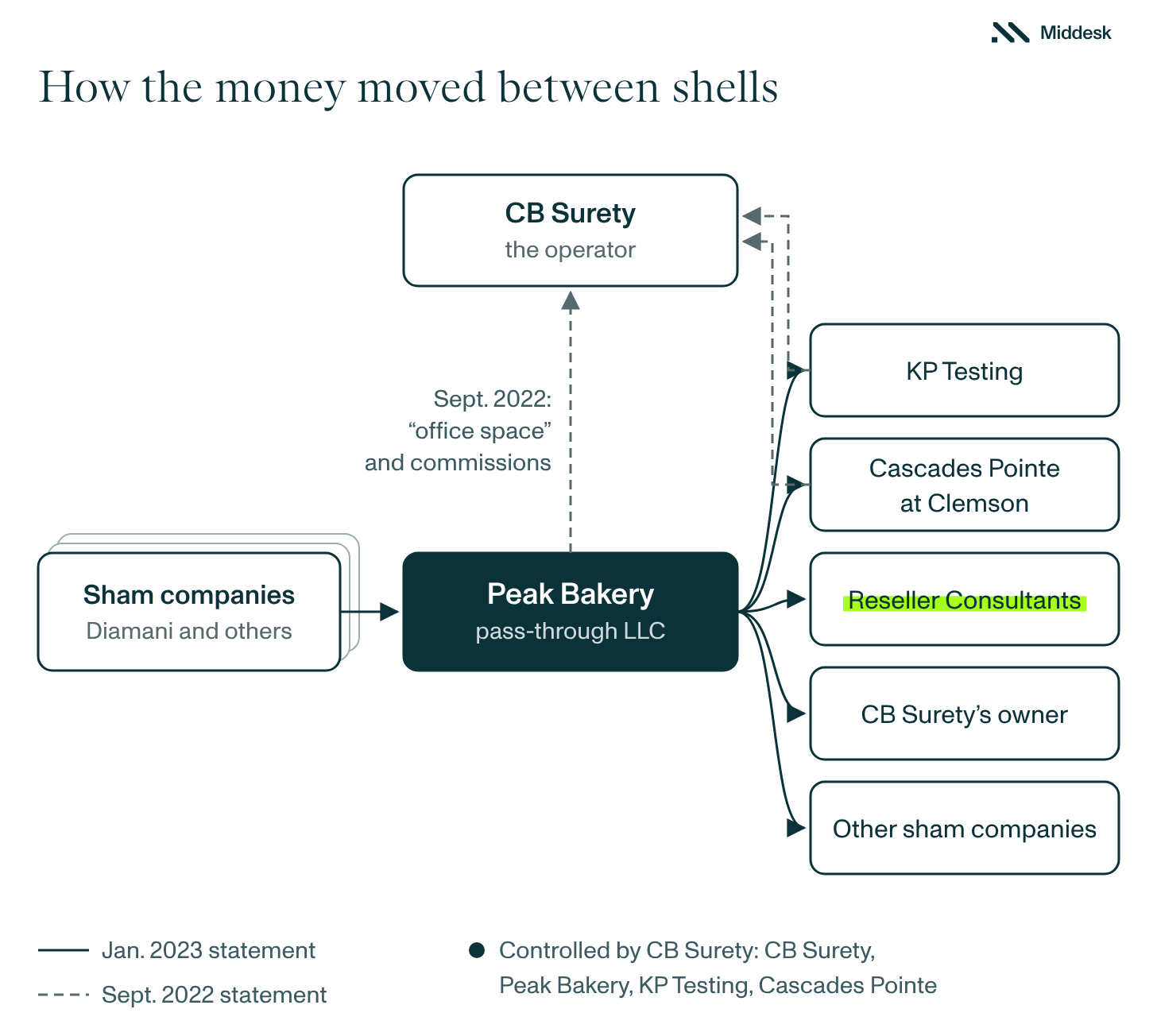
Court records show that when Diamani’s Chase account received $39,584.86 almost all of it was moved out to two accounts: $16,193 to Peak Bakery, a company controlled by CB Surety, and $21,830 to Nine2Five, the kratom seller behind Diamani.
Prosecutors say Peak Bakery and two other companies controlled by CB Surety, Cascades Pointe at Clemson and KP Testing, were created to disguise money moving between CB Surety and the rest of the scheme. The shells would pay CB Surety directly and would also receive money from other shells.
In 2022, Esquire Bank closed a CB Surety shell, and added it to MATCH, the industry’s list of terminated merchants, for excessive fraud. Esquire then found 104 more accounts linked to the two it had originally flagged and closed them all. The network moved its clients to other shells.
Losing accounts was part of the business. In August 2021 alone, banks declined 204 of the network’s applications and closed 46 of its accounts. They approved 10.
CB Surety’s owner pled guilty to the scheme in August and is facing up to 30 years in prison.